








Chandigarh: The Haryana government has approved a new policy that will allow nursing homes to be set up in licensed residential plotted colonies across the state. The decision was taken at a state cabinet meeting held on Monday evening under the leadership of chief minister Nayab Singh Saini.
The move is aimed at improving access to healthcare in growing residential areas, so that people can get basic medical services closer to their homes. Officials said the policy will help strengthen healthcare facilities at the neighbourhood level.
Under the new rules, nursing homes can be opened on residential plots in licensed colonies after paying the required conversion charges. However, only qualified allopathic or AYUSH doctors who own the plot will be allowed to apply. They must have valid registration with the Medical Council or AYUSH Council, be actively practising, and be registered with the local branch of the Indian Medical Association. Applicants will also need to submit an affidavit confirming these details.
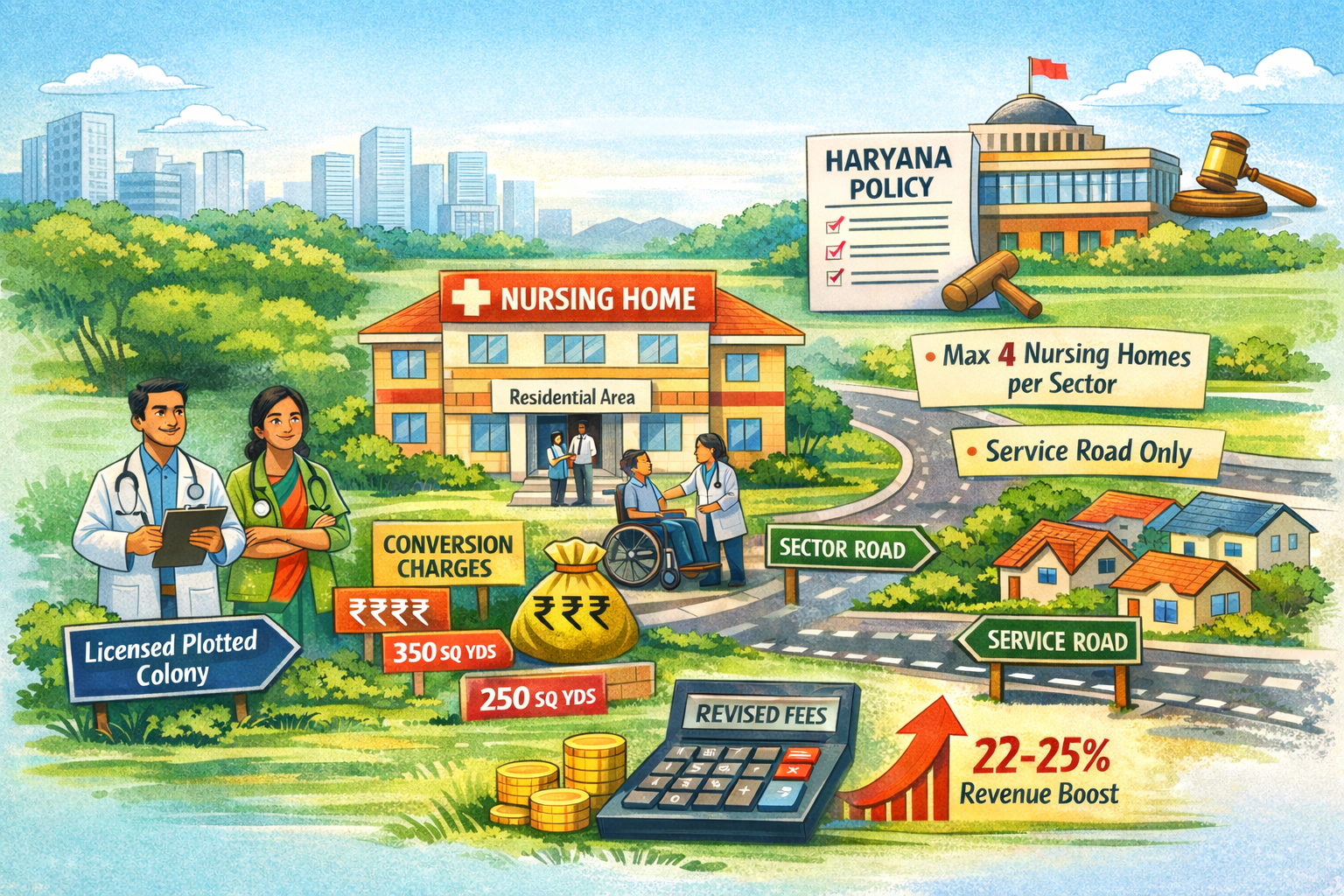
The policy limits the number of nursing homes to a maximum of four in each sector. In hyper and high potential zones, the minimum plot size required will be 350 square yards. In medium and low potential zones, the minimum size will be 250 square yards.
Permission will be granted only for plots located on service roads along sector or master roads. These plots must be part of licensed colonies where internal development works have been completed and completion or part-completion certificates have been issued. Only one nursing home will be allowed on a service road along a sector-dividing road, with a maximum of four such sites in a sector.
The government has fixed conversion charges based on the location of the plot. Owners in hyper zones will have to pay Rs 10,000 per square yard, those in high zones Rs 8,000, in medium zones Rs 6,000, and in low zones Rs 4,000 per square yard. No additional charges, including External Development Charges, will be applied.
Apart from this, the cabinet also approved the start of the state Assembly’s budget session from February 20 in Chandigarh.
The cabinet further cleared a proposal to revise several statutory charges under existing urban development rules. These include scrutiny fees, conversion licence fees, State Infrastructure Development Charges and Infrastructure Augmentation Charges. Officials said many of these charges had not been updated for years, and the revision was needed to match current development costs and support urban infrastructure.
According to the government, the revised fee structure is expected to increase the state’s revenue from licences and related charges by around 22 to 25 per cent.
(with inputs from agencies)